
Her most cherished values: a conversation with author Patricia Henley
On the publication of her new story collection, APPLE & PALM, we talk about her long writing career.

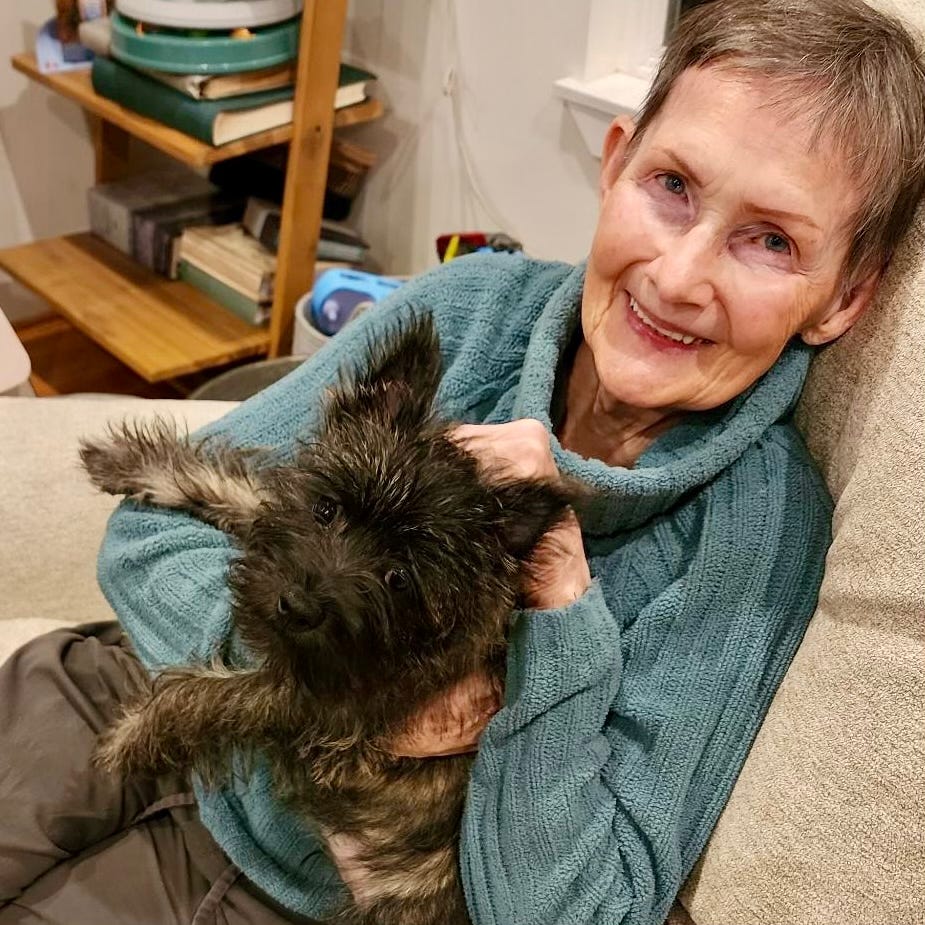
Patricia is my longtime friend and mentor. I wrote to her for guidance when I was starting my first novel, having no idea how to write a novel. She was teaching at Purdue. My family and job were in North Carolina. I couldn’t pick up and move to West Lafayette, Indiana. So she took me on as her long-distance private student and coached me through a first draft of Byrd.
She taught me many things. How to craft a novel. How to tap into the hearts of characters. She taught me that writing, the most private and personal of occupations, is at its core an exercise in generosity.
Patricia’s books
Friday Night at Silver Star, stories (Graywolf Press, 1986): Set in the West, these are stories of characters who came of age in the sixties and seventies, trying to reconcile their ideals with a changed world. James Crumley: “Patricia Henley … has a real, honest face in these stories and in her unique vision, and she tells her stories beautifully in a prose that is elegant without being affected, that is strong and patient and hopeful.”
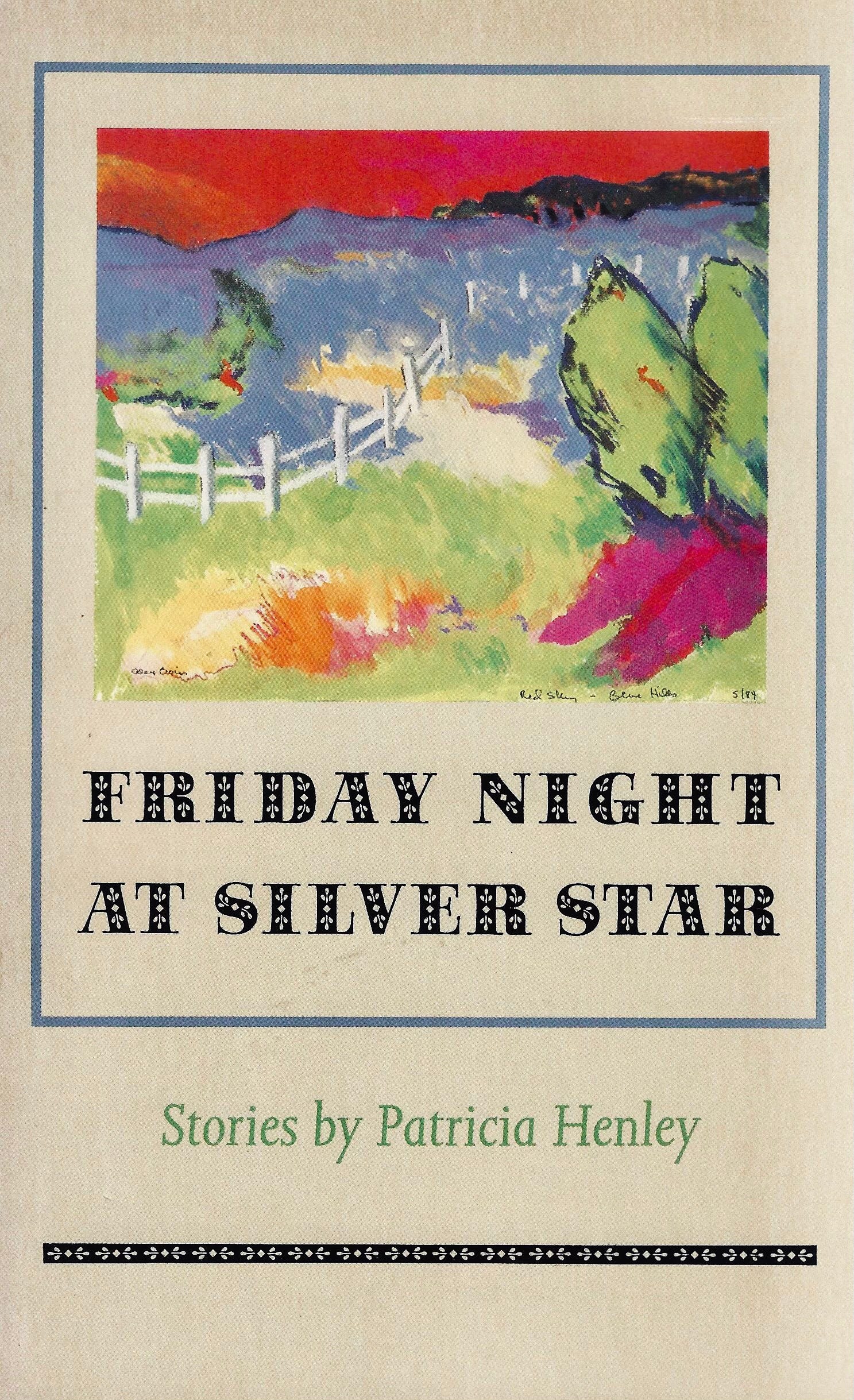
I read the book on my honeymoon in Wyoming — a gift from Anthony, my husband. It was perfect reading: it sharpened my appreciation for a wild, dusty place. The characters were familiar, old hippies making their way. Patricia’s prose is clean and sturdy and vivid and wise and full of heart, and I thought, if I ever take up writing fiction, I will come back to this book to learn how.
The Secret of Cartwheels, stories (Graywolf Press, 1992): Stories of a Catholic childhood and an adventurous young adulthood. Andre Dubus: “Patricia Henley’s delight in the physical world of the earth and the flesh is a spiritual celebration of being alive.”
Hummingbird House, novel (MacMurray & Beck, 1999): An American midwife travels to Central America in the 1980s to care for the children of war. John Sayles: “A strong, deeply felt novel of those American soldiers of misfortune who offer their lives in service to the Third World, often coming to realize that the only power they really have is the power to care. A heart-breaking book.” Finalist for the National Book Award and The New Yorker Best Fiction Book Award. Special 20th Anniversary Reprint Edition issued by Haystack Books, 2019.
Worship of the Common Heart: New and Selected Stories (MacMurray & Beck, 2000): an overview of “twenty years in the evolution of a writer.” William Kittredge: “Patricia Henley is one of our finest short story writers.”
In the River Sweet, novel (Pantheon, 2002): A devout Indiana wife and mother is confronted with a secret from her history in 1968 Saigon, where she volunteered at a convent during the Vietnam War. “An atmospheric and involving drama of family, belief, and moral quandaries” (Seattle Post-Intelligencer); “conjures the bygone Vietnam era with eerie and bittersweet poignancy” (Dallas Morning News).
Other Heartbreaks: Stories (Engine Books, 2011): Stories of women struggling with matters of the heart. Robert Olen Butler: “The sweet sadness of life shimmers in these tales.”
Apple and Palm (Cornerstone Press, 2026): Linked stories set in and around Whistle Pig, a small town in Western Maryland, where the mountainous landscape seems immutable but the characters are not. From the publisher: “The stories in Apple & Palm are a provocative close-up examination of aging, memory, and desire. Sentence by sentence, Patricia Henley shows … why she is a master of the short story craft.”
Patricia is also the author of two poetry chapbooks: Learning to Die (Three Rivers Press, 1979) and Back Road (Carnegie Mellon Press, 1996); a YA novel co-authored with Elizabeth Stuckey-French, Where Wicked Starts (Lacewing, 2014); and a stage play.
Our conversation
On the eve of publication of her new story collection, we looked back on her long career. I asked about each of her books:
- Over what period of your life did you work on it?
- Could it have been written at any other time?
- Did writing it change you or how you thought of yourself?
- Did publishing change you?
Patricia: Kim, I’d like to focus on six books of fiction if that is all right. I will write about pivotal books, books that changed me and/or my life.
Friday Night at Silver Star, 1986
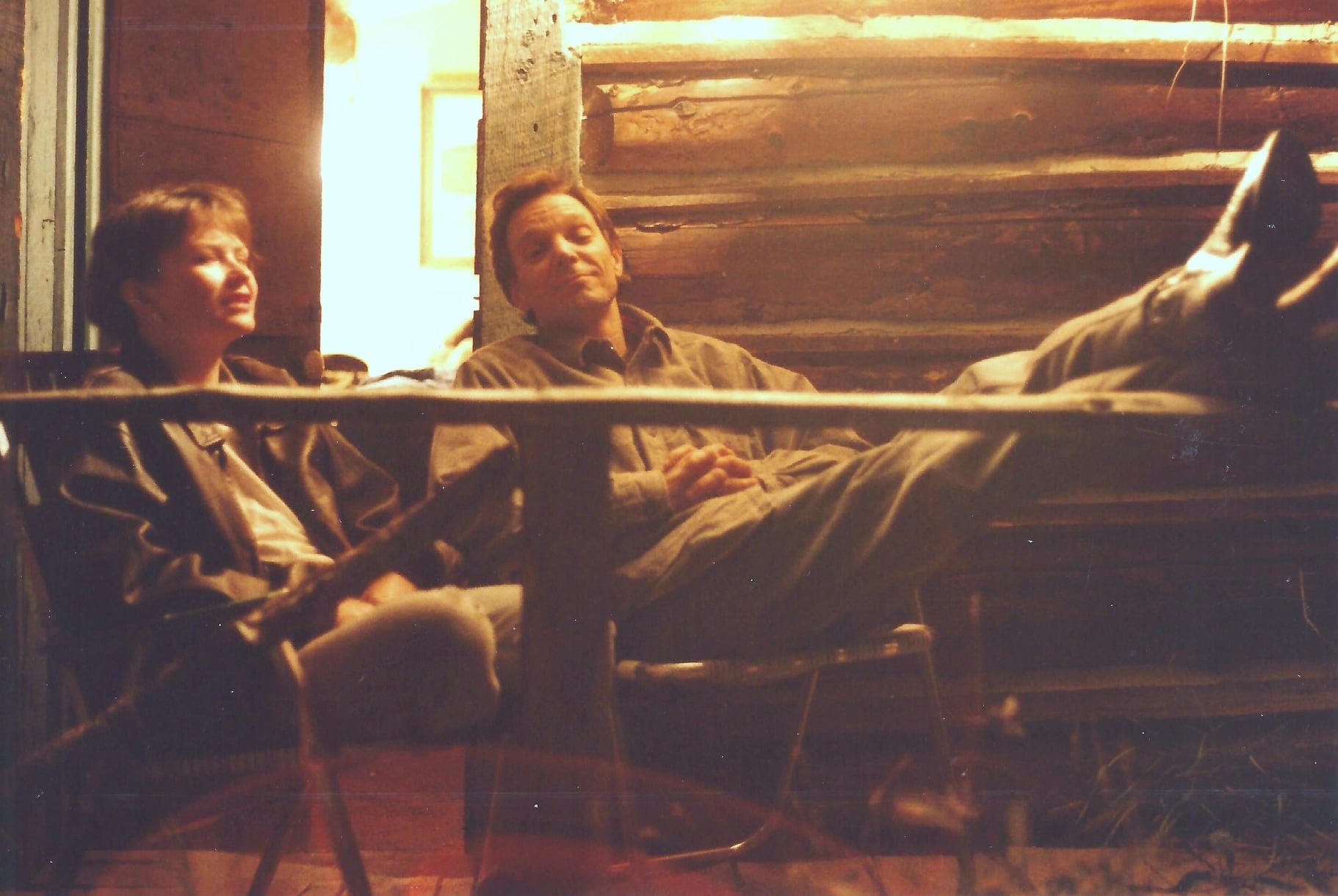
These stories were written under duress! They were typed on different typewriters. This was the early to mid-eighties. When I wrote some of the stories I was working as a barista in Bozeman, Montana. I had done so many menial jobs to support my writing habit. I was in my late thirties. Living hand to mouth, I wondered if any of my dreams would ever come true. After work, I would squirrel away in the bedroom and write. I would read one story a night from Best American Short Stories. I couldn’t afford to buy books. I borrowed these volumes from the public library. I did that for about a year; I was trying to absorb how stories work and what was possible in a short story.
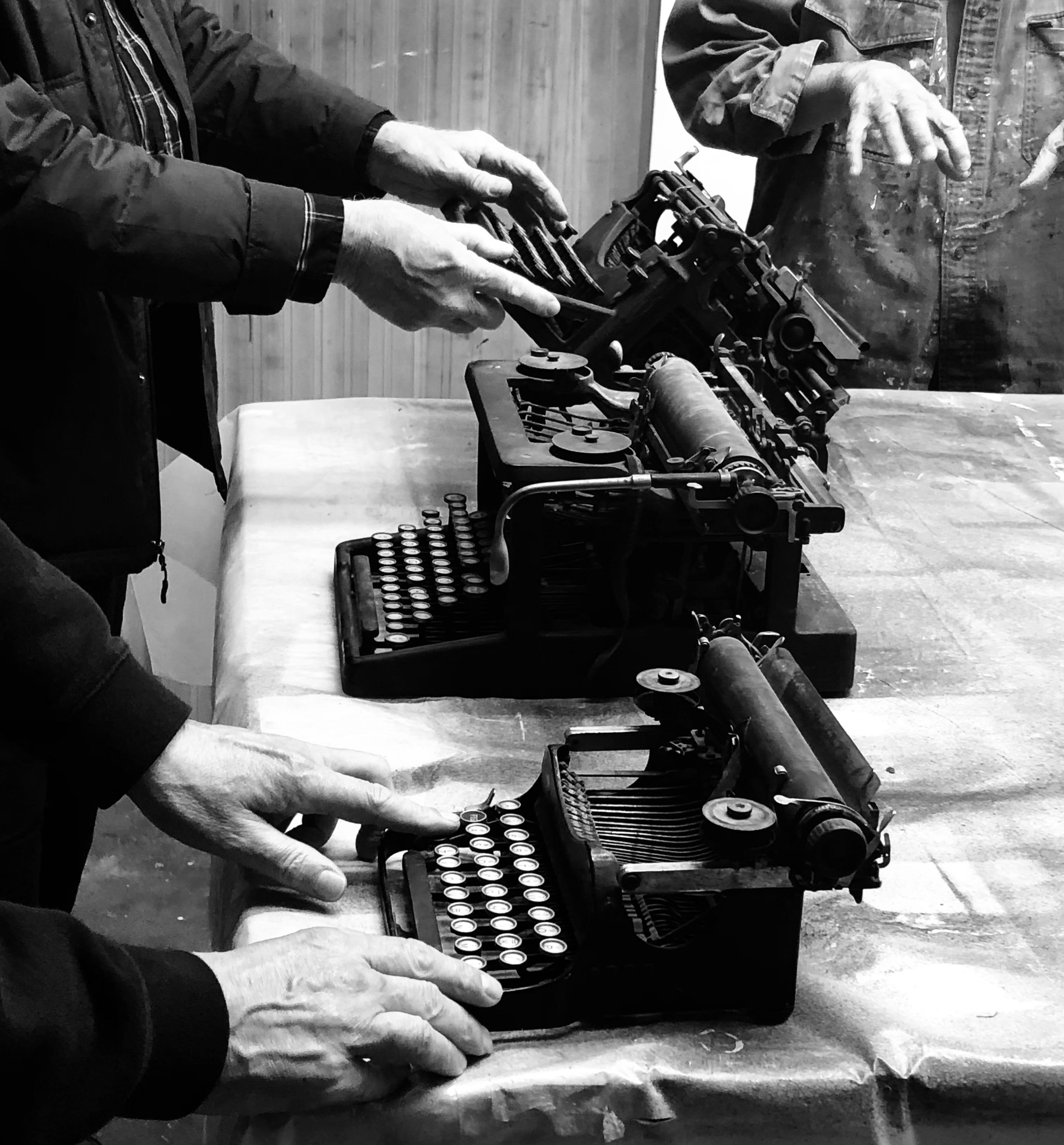
I met two encouraging writers there in Bozeman, Linda Peavy and Ursula Smith. They insisted that I should enter the Montana First Book Award competition. My life was such that I couldn’t imagine retyping the stories and creating a tidy manuscript. I used what I had, all those mismatched fonts, and I hand-wrote page numbers on the motley collection. Bob Wrigley and Jim Crumley were the judges. It was a stroke of luck that I won the competition, and an even more fabulous stroke of luck that Graywolf wanted to publish Friday Night at Silver Star. Scott Walker, founder and publisher of Graywolf, believed in my work.
Friday Night at Silver Star was reviewed in The New York Times and that marked a turning point for me. It gave me energy for writing another collection. And it meant I could apply for teaching jobs that required a book. I moved to Purdue University in Indiana and became solvent financially for the first time in my life. I was forty years old.
The Secret of Cartwheels, 1992
I wrote this collection with less stress in my life. I was working out some trauma from my childhood; aspects of the stories are autobiographical. The title story was selected by Richard Ford for inclusion in Best American Short Stories. To have his support, and the support of other writers further along the path, boosted my confidence. My second marriage ended during this period, and my primary identity as a writer was clarified by living alone and reveling in solitude.
Hummingbird House, 1999
I’d always been interested in the fate of indigenous people all over the world. Friends returned from Guatemala with stories of their adventures there. I decided in 1989 to see for myself, thinking that I might write a few stories set in Guatemala. I went for two months that first time. When I heard the story of an American priest who’d been murdered during the civil war, I knew that story was not a short story. It had to be a novel. I made five research trips to Central America, interviewed countless Guatemalans, read about the history and the conflict, and ten years later I finally held the book in my hands.
Writing this book may have changed me more than any other. I was in awe of the many Americans and Europeans who went to Central America and lived outside their comfort zones in order to do any number of jobs that needed doing – teaching people to read, delivering babies, constructing water systems, and so on. I realized that I could, and should, bring my most cherished values to my writing.
I owe an incredible debt to Fred Ramey, who was the editor at MacMurray & Beck in Denver. He accepted the book, actually edited it (something few editors do these days), and Hummingbird House became a finalist for both The New Yorker Fiction Prize and the National Book Award. I had more visibility and wanted to write a second novel. In the River Sweet was borne of that energy.
In the River Sweet, 2002
I worked feverishly to write this book. I traveled to Vietnam to research the Vietnam sections. One thing I love about the writing life is that I never know what I’ll become obsessed with in a year or five years. I was able to write about the absolute necessity of peeling back false layers of one’s personality in order to become whole. Ruth Anne, the central protagonist, has kept big secrets; eventually, in order to see what comes next, she has to stop denying who she has been.
In the River Sweet is the only book that generated sizable income. I bought a country house, traveled more, but I didn’t foolishly quit my day job. A good thing because no other big money from writing ever came my way after that. Writing seems like gambling sometimes. You win some, you lose some.
Other Heartbreaks, 2011
I’m fond of the stories in this collection. The last three were extracted from a novel that failed and failed again. I’m indebted to Victoria Barrett, publisher at Engine Books, who believed in the stories at a time when a couple of my writing projects had ended up on dead-end streets. Again, I took the opportunity to write about a concern of mine, gang violence and its fallout on an ordinary American family in Chicago. Researching those last three stories was exhilarating. I spent months in Chicago from 2009-2011. Victoria lobbied tirelessly for reviews of Other Heartbreaks. You ask if writing this book changed me. I’d say that I felt galvanized. In spite of professional failures, in spite of another marriage failing, I embraced writing as the most robust aspect of my life. Whenever I opened my laptop to write, I felt as if I were coming home.
Apple & Palm, 2026
Margaret Atwood said something like this: The desire to be loved is the last illusion. Give that up and you will be free.
In the last eight years I have abandoned this desire. Or it simply fell away from me. It’s only in the last eight years that I have fully embraced feminism as a chief aspect of my identity. The stories in Apple & Palm arose from that shift in identity. They are about women involved in what I like to call The Central Argument, that is, it’s central to many women whose hormones no longer govern them. And most recently, I see that it’s become a question for young women who are exploring flying solo. Women are asking, Do I want romantic love in my life?
When I first started writing these stories, I didn’t know that was my subject matter. I was only writing. Slowly, the stories coalesced into a collection, and it seems obvious to me now that I was dealing with The Central Argument in my own life.
KC: When I interviewed you for Fiction Writers Review in 2020, you were nudging at the subject in a series of micro-memoirs about “embracing crone life” — memoirs that anticipated your new stories. You said then:
I like the freedom of getting up every day and letting writing be front and center in my life. I don’t have romance in my life. I’m not ruling it out. But I love living alone without the static of another person’s needs and wants. My new work is about this very thing.
With Apple & Palm, you’ve developed clarity around what you call The Central Argument. Could you elaborate on what that term means?
PH: As a girl, like most women of my generation, I was trained to want to be loved and desired, to center men in my life, to mate and marry. I did that for many years. But since I had an intense calling, from girlhood onward, to write stories, these two parts of my life were always at loggerheads. It took decades for me to realize that my writing life had to supersede my love life. I was a slow learner. That’s The Central Argument. It’s possibly easier for young women now. When I hear an audience of young women shouting the lyrics to the song “Labour,” I know we’ve come a long way. “Labour” is the anthem of the movement to de-center men. These young women know in their bones that they have the choice. Or many choices.
Does the publication of this book change me? I’m seventy-eight years old. It is enormously satisfying to know that I’ll have another book out in the world. So it has changed me, yes! I have more energy for life and for writing.
KC: Thank you, Patricia, and congratulations. You never cease to inspire me.
Apple & Palm is available from Cornerstone Press, bookshop.org, your local bookseller, and the big corporate stores.
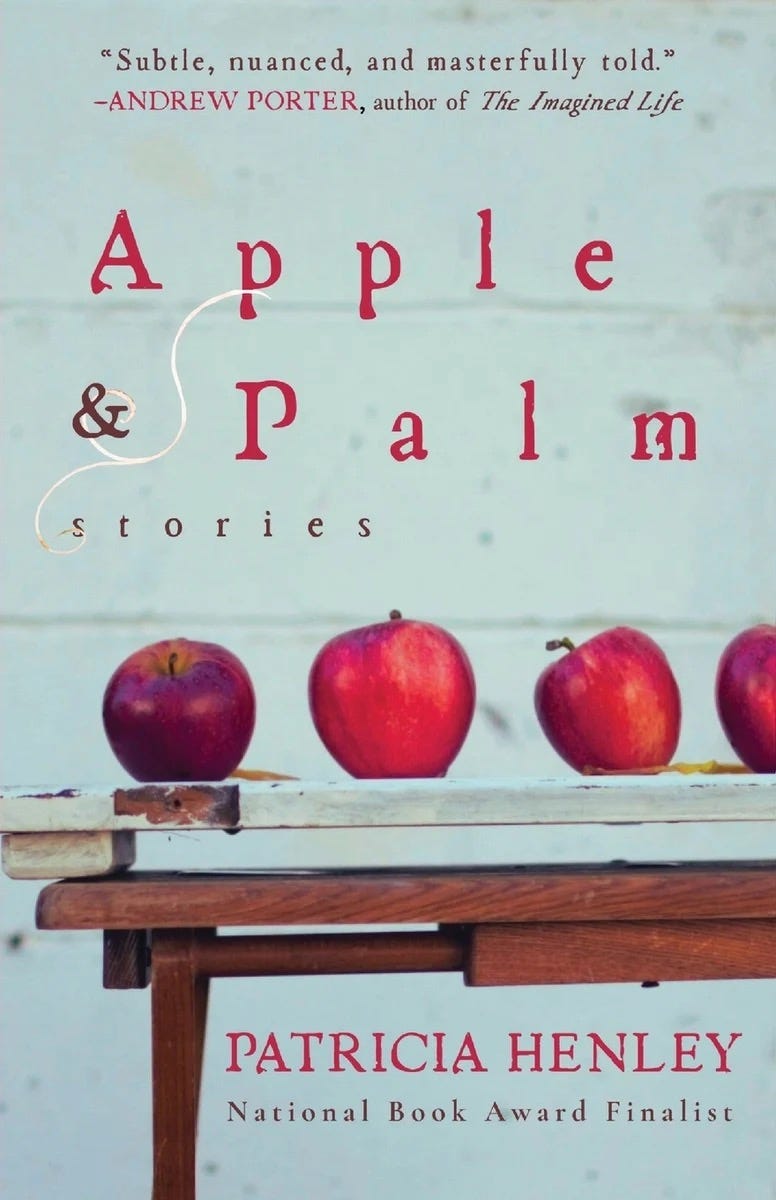
Linked stories, my favorite form!